
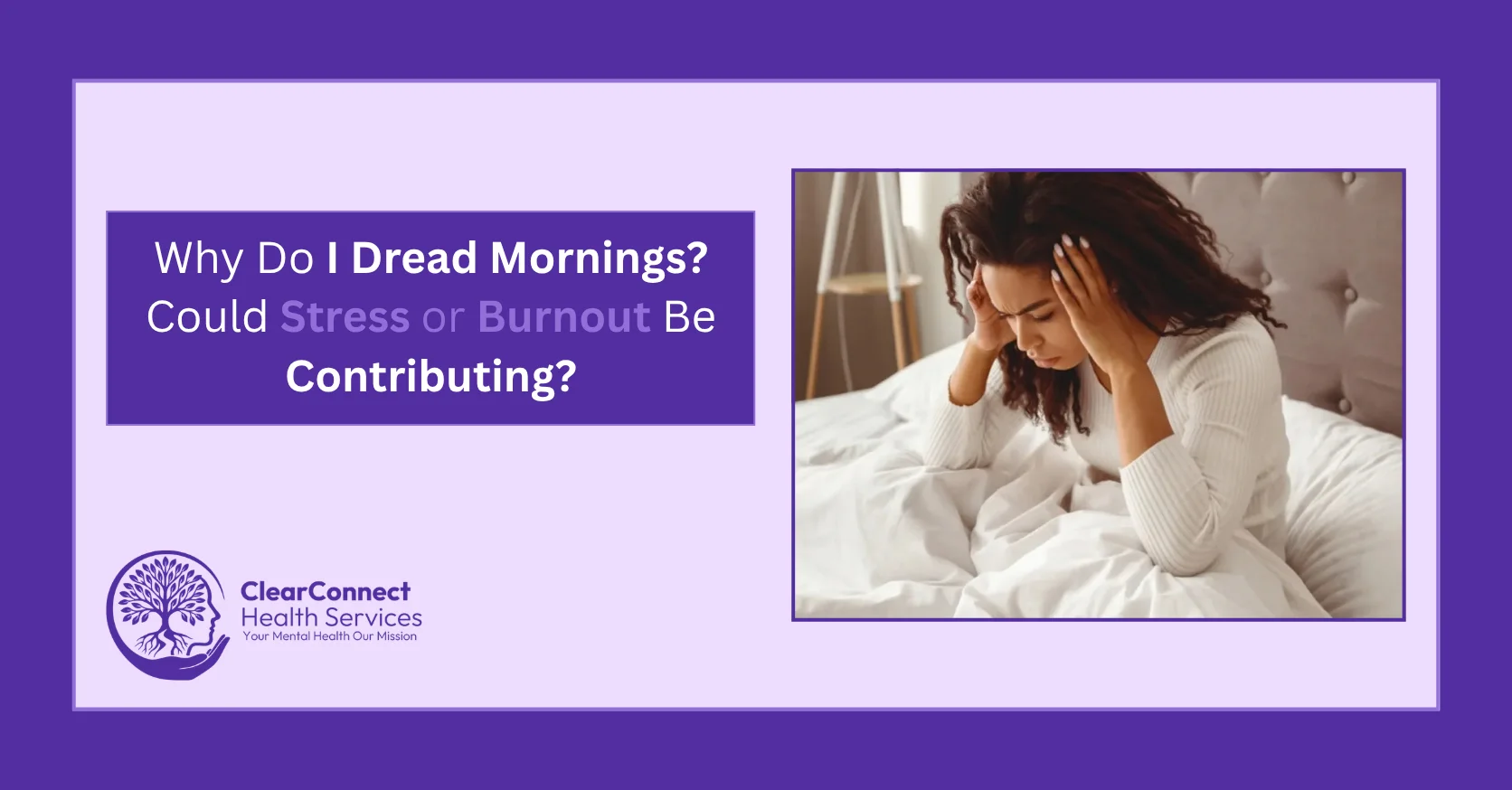
Do you wake up already feeling overwhelmed by the day ahead? Before you have even gotten out of bed, you may feel anxious, exhausted, unmotivated, or emotionally drained. Some people describe this as morning dread. Morning dread is not a diagnosis, and it does not automatically mean burnout. Persistent morning dread can occur with chronic stress, anxiety, depression, poor sleep, burnout, ADHD, medical conditions, medication effects, or a combination of factors.
What Is Morning Dread?
“Morning dread” is an informal term for significant worry, tension, or emotional heaviness when waking up or thinking about the day ahead. Occasional morning stress does not necessarily indicate a mental health condition. When it happens frequently or interferes with daily functioning, it may be worth exploring what is contributing to it.
Could Morning Dread Be Related to Burnout?
It can be. Burnout is commonly associated with prolonged or poorly managed stress, particularly when demands continue without enough opportunity for recovery. Morning dread may occur alongside persistent exhaustion, reduced motivation, irritability, concentration problems, sleep difficulties, and emotional exhaustion. However, morning dread alone cannot tell you whether you have burnout.
Stress vs. Burnout: What’s the Difference?
Stress often involves feeling that there is too much to manage. Burnout is more often associated with prolonged exhaustion, reduced engagement, and feeling depleted after ongoing stress. Both can affect concentration, sleep, mood, and daily functioning.
What Else Can Cause Morning Dread?
Anxiety can cause worry about upcoming responsibilities or uncertainty. Depression can affect energy, motivation, concentration, sleep, and interest in activities. Poor-quality sleep can make mornings harder. Adults with ADHD may feel overwhelmed by tasks they need to organize and complete. Chronic stress or burnout can make mornings feel associated with another difficult or exhausting day. Several of these concerns can occur at the same time.
Signs It’s Time to Pay Attention
Consider how often symptoms occur and how much they affect your life. Persistent morning dread, exhaustion despite adequate rest, difficulty concentrating, increasing irritability, loss of motivation, withdrawal from activities, sleep problems, persistent anxiety, low mood, or difficulty keeping up with responsibilities deserve attention.
What Can You Do About Morning Dread?
A consistent morning routine, attention to sleep, regular breaks, identifying patterns or stressors, and maintaining supportive connections may help. If symptoms persist, a professional evaluation can help identify contributing factors.
When Should You Seek Professional Help?
Consider talking with a healthcare or mental health professional if morning dread happens frequently, becomes more intense, interferes with work or relationships, occurs with persistent anxiety or low mood, is accompanied by significant sleep problems, or makes it difficult to concentrate or function.
How ClearConnect Mental Health Can Help
At ClearConnect Mental Health, we do not assume that exhaustion, poor concentration, anxiety, or morning dread automatically means burnout. Our psychiatric providers take a comprehensive approach to understanding symptoms and daily functioning. Depending on individual needs, care may include comprehensive psychiatric evaluation, diagnostic clarification, individualized treatment planning, medication management when clinically appropriate, ongoing psychiatric follow-up, and coordination with therapists or other healthcare professionals when appropriate. ClearConnect provides secure telehealth psychiatric care across Virginia and in-person appointments when appropriate.
Frequently Asked Questions
Is morning dread a sign of burnout?
It can occur with burnout, but morning dread alone does not establish burnout. Anxiety, depression, chronic stress, poor sleep, ADHD, and other concerns can cause overlapping symptoms.
Why do I wake up anxious?
Morning anxiety can have many possible causes, including ongoing stress, anxiety disorders, sleep problems, depression, anticipated responsibilities, and other mental or physical health factors.
Why am I exhausted even after sleeping?
Persistent fatigue can have psychological, sleep-related, medication-related, and medical causes. If adequate sleep is not improving your exhaustion, consider discussing it with a healthcare professional.
Can ADHD make mornings difficult?
ADHD can contribute to difficulty initiating tasks, organizing responsibilities, managing time, and feeling overwhelmed. These symptoms can also occur with other conditions, so a comprehensive evaluation is important.
Get Clarity About What You’re Experiencing
If morning dread, exhaustion, anxiety, or difficulty concentrating is affecting your daily life, ClearConnect Mental Health can help you better understand what may be contributing to your symptoms and discuss appropriate treatment options.
Call or Text: (540) 779-8166
Schedule Your Appointment Today
Helping You Feel Like Yourself Again.
No comment