
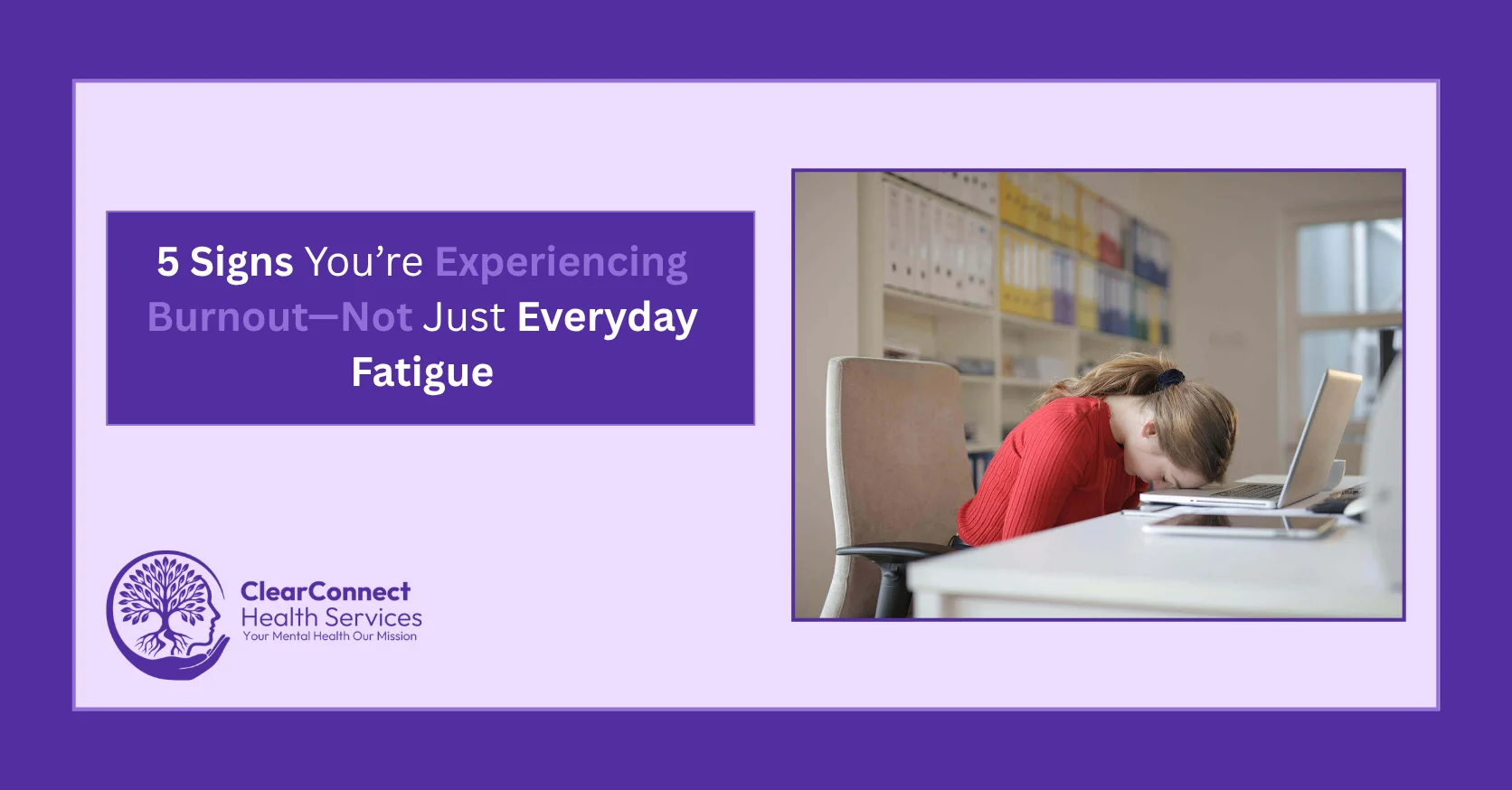
Feeling tired after a long day is normal. Most people recover after a good night’s sleep or a relaxing weekend. But what happens when you wake up exhausted day after day, no matter how much rest you get?
You may be experiencing burnout.
Burnout is more than ordinary fatigue. It is a state of emotional, physical, and mental exhaustion caused by prolonged stress. Left unaddressed, burnout can affect your mood, concentration, relationships, work performance, and overall quality of life.
Understanding the warning signs can help you recognize when it’s time to seek support.
What Is Burnout?
Burnout develops when ongoing stress overwhelms your ability to recover. While it is commonly associated with work-related stress, burnout can also result from caregiving, parenting, school, financial pressures, chronic illness, or other long-term responsibilities.
Burnout is not simply “being tired.” It affects how you think, feel, and function every day.
Although burnout itself is not considered a mental health diagnosis, it can contribute to or occur alongside conditions such as anxiety, depression, sleep disturbances, and adjustment disorders. A professional evaluation can help determine what is contributing to your symptoms.
Sign #1: Rest No Longer Leaves You Feeling Refreshed
One of the earliest signs of burnout is persistent exhaustion.
Even after a full night’s sleep—or an entire weekend of rest—you may wake up feeling drained, sluggish, or emotionally depleted.
Instead of restoring your energy, sleep may feel like it barely makes a difference.
If fatigue continues despite adequate rest, it may be time to explore whether chronic stress is affecting your mental health.
Sign #2: Small Problems Trigger Big Emotional Reactions
Have you noticed yourself becoming impatient or irritated over things that normally wouldn’t bother you?
When you’re experiencing burnout, your emotional reserves become depleted. Minor inconveniences—such as traffic, household chores, or simple questions—may suddenly feel overwhelming.
You may find yourself:
- Becoming frustrated more easily
- Feeling emotionally overwhelmed
- Snapping at loved ones or coworkers
- Feeling guilty after reacting
These emotional changes are often signs that your stress level has exceeded your ability to cope effectively.
Sign #3: Activities You Once Enjoyed No Longer Interest You
Burnout can gradually take the enjoyment out of everyday life.
You may stop looking forward to hobbies, spending time with friends, exercising, or activities that once brought you happiness.
Instead, you might feel emotionally numb or disconnected, preferring to withdraw rather than participate.
This loss of motivation is an important warning sign that should not be ignored.
Sign #4: Stress Begins Affecting Your Physical Health
Mental stress often shows up physically.
Common physical symptoms associated with chronic stress and burnout include:
- Frequent headaches
- Muscle tension
- Neck and shoulder pain
- Digestive problems
- Trouble sleeping
- Feeling run down more often
While these symptoms can have many causes, chronic stress places significant demands on both the mind and body.
If physical symptoms persist, it’s important to speak with your healthcare provider.
Sign #5: You Have Difficulty Concentrating or Remembering Things
Many people experiencing burnout describe feeling mentally “foggy.”
You may notice that you:
- Forget appointments
- Misplace everyday items
- Have difficulty concentrating
- Read the same paragraph repeatedly
- Take much longer to complete routine tasks
These symptoms can resemble ADHD, anxiety, depression, or other mental health conditions.
A comprehensive psychiatric evaluation can help determine whether your concentration difficulties are related to burnout, ADHD, or another underlying condition.
Burnout vs. Being Tired
Everyone feels tired occasionally.
The difference is recovery.
With normal fatigue, rest restores your energy.
With burnout, exhaustion often persists despite sleep, time off, or a slower schedule.
If symptoms continue for weeks and begin affecting your daily functioning, professional support may be beneficial.
When Should You Seek Help?
Consider speaking with a mental health professional if you:
- Feel emotionally exhausted most days
- Have difficulty functioning at work or home
- Notice increasing anxiety or depression
- Feel disconnected from activities you once enjoyed
- Experience ongoing concentration problems
- Feel overwhelmed despite getting enough rest
Early intervention can prevent burnout from worsening and improve your overall well-being.
How ClearConnect Mental Health Can Help
At ClearConnect Mental Health, we recognize that symptoms such as fatigue, poor concentration, irritability, and emotional exhaustion can have many different causes.
Our psychiatric providers perform comprehensive evaluations to better understand your symptoms and identify whether they may be related to chronic stress, anxiety, depression, ADHD, or another mental health condition.
Our services include:
- Comprehensive psychiatric evaluations
- Medication management when appropriate
- Personalized treatment planning
- Secure telehealth appointments throughout Virginia
- Compassionate, evidence-based mental health care
Our goal is to help you regain balance, improve daily functioning, and feel like yourself again.
Frequently Asked Questions
How is burnout different from being tired?
Ordinary fatigue usually improves with rest. Burnout involves persistent emotional, physical, and mental exhaustion that continues despite adequate sleep and time off.
Can burnout cause brain fog?
Yes. Many people experiencing burnout report difficulty concentrating, forgetfulness, and slower thinking. These symptoms can overlap with other mental health conditions, making a professional evaluation important.
Is burnout the same as depression?
No. Although burnout and depression share some symptoms, they are not the same. A mental health professional can help determine the underlying cause of your symptoms.
Can burnout be treated?
Yes. Recovery often involves reducing chronic stress, improving coping strategies, addressing underlying mental health concerns, and developing a personalized treatment plan.
Take the First Step Toward Feeling Better
If chronic stress, emotional exhaustion, or difficulty concentrating is affecting your daily life, you don’t have to manage it alone.
ClearConnect Mental Health provides compassionate, evidence-based psychiatric care through secure telehealth appointments across Virginia.
Call or Text: (540) 779-8166
Schedule Your Appointment Today
Helping You Feel Like Yourself Again.
No comment