
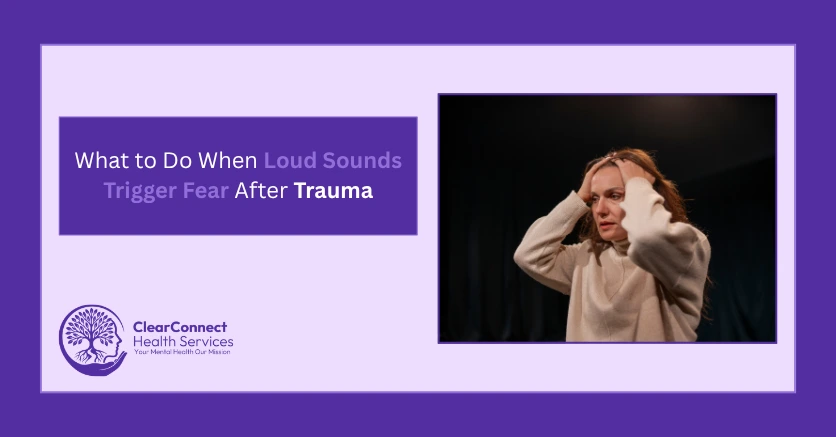
A door slams. A car backfires. Something falls unexpectedly.
For most people, the reaction may last only a few seconds. But after a traumatic experience, an unexpected sound can trigger intense fear, a racing heart, muscle tension, or an overwhelming urge to escape.
You may even know logically that you’re safe while your body seems to react as though something dangerous is happening.
Why does this happen?
After trauma, the brain’s threat-response system can become more sensitive to potential danger. Certain sounds—especially those associated with the traumatic experience—may trigger an automatic stress response.
Understanding what’s happening in your body and learning how to respond can help you feel more in control.
Why Can Loud Noises Trigger Fear After Trauma?
During a frightening or dangerous experience, your body’s survival system activates automatically.
This is commonly known as the fight, flight, or freeze response.
Your heart may beat faster, your breathing may change, your muscles may tense, and your attention becomes focused on identifying and escaping danger.
These reactions are designed to protect you.
After a traumatic experience, however, your nervous system may remain highly alert. A sudden sound can activate the same alarm response even when there is no immediate danger.
For example, someone who experienced a serious motor vehicle accident may become distressed by screeching tires, horns, or the sound of a collision.
Someone whose trauma involved gunfire may react strongly to fireworks, a car backfiring, or another unexpected bang.
The reaction can occur before you’ve had time to consciously determine whether the sound is actually dangerous.
Why Are Certain Sounds More Triggering Than Others?
The brain forms associations between a traumatic event and details surrounding it.
Those details can include:
- Sounds
- Smells
- Places
- People
- Physical sensations
- Certain times or situations
Later, encountering one of those reminders can activate a fear response.
These reminders are often called trauma triggers.
Sometimes the connection is obvious. Other times, you may experience anxiety without immediately understanding what triggered it.
Learning to recognize your triggers can help you understand your reactions and develop healthier ways of responding to them.
What Does a Trauma Response to Sound Feel Like?
People experience trauma triggers differently.
After hearing a sudden or triggering sound, you may notice:
- A racing or pounding heartbeat
- Rapid or shallow breathing
- Sweating
- Muscle tension
- Shaking
- Feeling frozen
- Feeling unusually alert or watchful
- Difficulty concentrating
- A sudden feeling of fear or panic
- An urge to leave or find somewhere safe
Some people recover within minutes. Others remain anxious or unsettled much longer.
If these reactions happen frequently or begin interfering with everyday life, they may be worth discussing with a mental health professional.
What Can You Do When a Loud Sound Triggers You?
When your body’s alarm system activates, the immediate goal is to help yourself reconnect with the present moment.
1. Orient Yourself to the Present
Look around and notice where you are.
Remind yourself of what is happening now rather than what happened in the past.
You might quietly tell yourself:
“That was a loud noise. I am here, and I am safe right now.”
2. Slow Your Breathing
Try taking slow, comfortable breaths.
Breathe in gently through your nose and allow yourself to exhale slowly.
Rather than forcing yourself to immediately stop feeling anxious, focus on gradually allowing your body to settle.
3. Use Your Senses
Grounding techniques can redirect your attention toward your current surroundings.
Notice:
- What you can see
- What you can hear
- What you can physically feel
- Your feet touching the floor
- The chair supporting your body
These simple observations can help remind your brain that you’re in the present.
4. Give Yourself Time
Your body may need a few minutes to settle after being startled.
You don’t have to immediately force yourself to feel normal.
Recognize the reaction, allow it to pass, and continue with your day when you feel ready.
Should You Avoid Loud Sounds?
Wanting to avoid triggering sounds is understandable.
Temporary strategies—such as stepping away from an overwhelming environment—may help you regulate yourself in the moment.
However, avoiding every possible trigger can sometimes reinforce fear over time.
You may gradually stop attending events, visiting certain places, driving particular routes, or participating in activities you once enjoyed.
When avoidance begins restricting your life, professional treatment can help you develop healthier ways of responding to trauma reminders.
Are Sound Triggers a Sign of PTSD?
They can be, but experiencing a strong reaction to sound does not automatically mean you have Post-Traumatic Stress Disorder (PTSD).
PTSD involves a specific pattern of symptoms following trauma. These may include:
- Intrusive memories or flashbacks
- Nightmares
- Avoidance of trauma reminders
- Changes in mood or thinking
- Feeling constantly on guard
- Being easily startled
- Sleep difficulties
- Irritability or difficulty concentrating
A comprehensive psychiatric evaluation can help determine whether your symptoms are related to PTSD, anxiety, another trauma-related condition, or something else.
When Should You Seek Professional Help?
Consider talking with a mental health professional if:
- Loud sounds frequently trigger intense fear or panic.
- You avoid places or activities because you’re afraid of being triggered.
- You’re constantly watching for possible danger.
- You’re experiencing nightmares or flashbacks.
- Sleep has become difficult.
- Your symptoms interfere with work, relationships, or daily activities.
- Trauma-related symptoms aren’t improving over time.
You don’t have to wait until symptoms become severe before seeking help.
How ClearConnect Mental Health Can Help
At ClearConnect Mental Health, we understand that trauma can affect people in very different ways.
Our psychiatric providers take time to understand your symptoms, experiences, medical and mental health history, and how those symptoms are affecting your daily life.
Our services include:
- Comprehensive psychiatric evaluations
- Assessment of PTSD and trauma-related symptoms
- Medication management when clinically appropriate
- Individualized treatment planning
- Ongoing psychiatric follow-up
- Coordination with other members of your care team when appropriate
If psychotherapy or specialized trauma-focused therapy would benefit you, your provider can also discuss how therapy may fit into your overall treatment plan.
Our goal is to provide clear, compassionate, evidence-based psychiatric care based on your individual needs.
Healing From Trauma Takes Time
Being startled by a loud sound doesn’t mean you’re moving backward.
Trauma can teach the brain to react quickly to anything that resembles previous danger. Recovery involves gradually helping the mind and body recognize the difference between a reminder of danger and danger happening right now.
With appropriate support and treatment, trauma-related symptoms can improve.
Frequently Asked Questions
Why do loud noises make me panic after trauma?
After trauma, your body’s threat-response system may become more sensitive. Sudden sounds or sounds associated with the traumatic event can activate an automatic fight, flight, or freeze response even when you’re currently safe.
Are sound triggers always a sign of PTSD?
No. Sound sensitivity and strong startle responses can occur after trauma without meeting the criteria for PTSD. A professional evaluation can help determine what’s contributing to your symptoms.
Should I use earplugs when sounds trigger me?
Earplugs or noise-reducing strategies may be useful temporarily in particularly overwhelming environments. However, constantly avoiding everyday sounds may reinforce fear for some people. If sound triggers significantly restrict your life, consider discussing them with a mental health professional.
Can medication help with trauma-related symptoms?
Medication may be appropriate for some people experiencing PTSD, anxiety, depression, sleep disturbances, or other symptoms associated with trauma. Treatment decisions should be based on an individualized psychiatric evaluation.
Ready to Talk About What You’re Experiencing?
If trauma-related fear, anxiety, sleep problems, or other symptoms are interfering with your daily life, ClearConnect Mental Health can help you better understand what’s happening and explore appropriate treatment options.
Call or Text: (540) 779-8166
Schedule Your Appointment Today
Helping You Feel Like Yourself Again.
No comment