
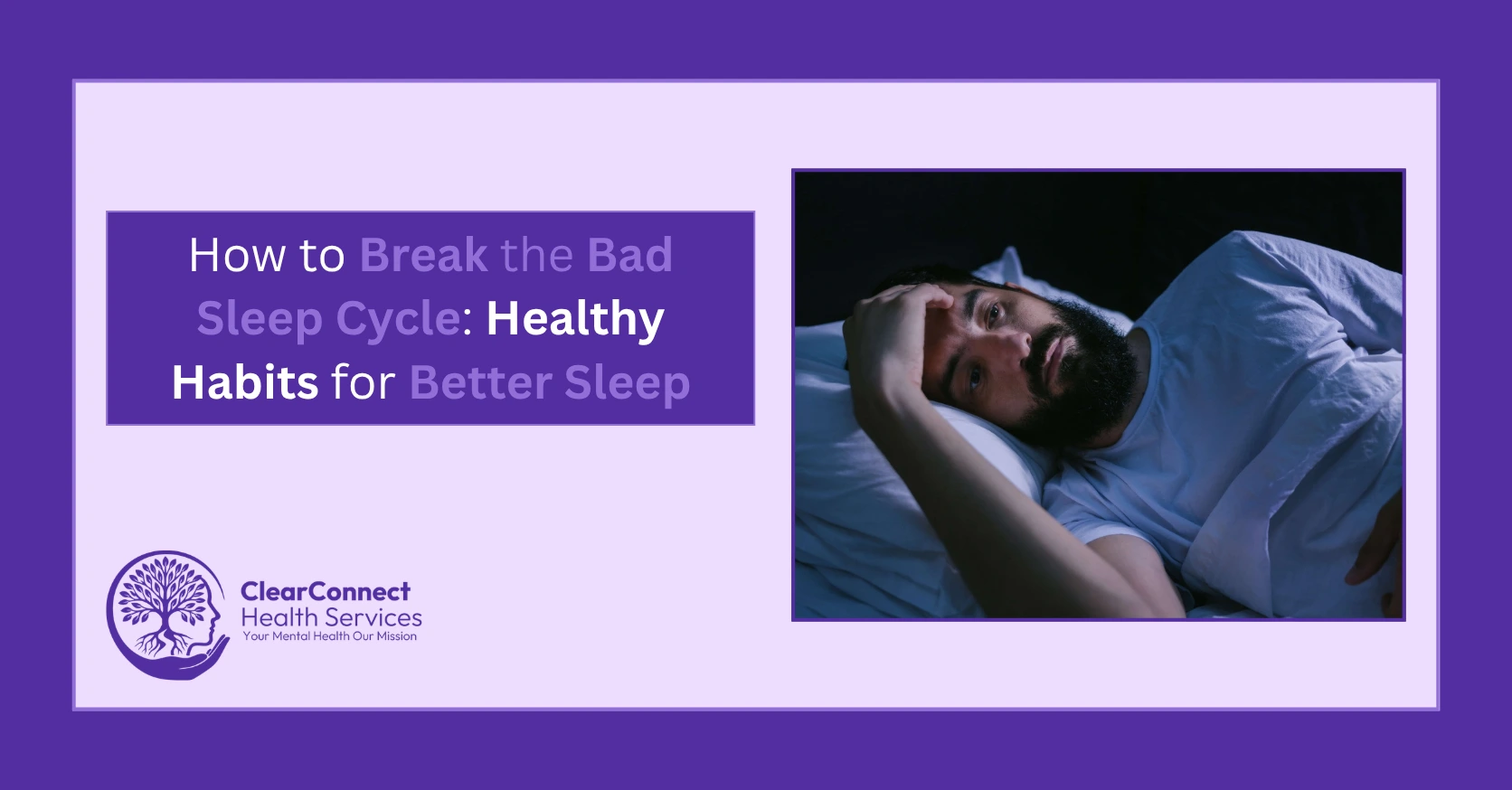
Do you fall asleep exhausted, only to wake up feeling like you never truly rested?
Occasional sleepless nights happen to everyone. But when poor sleep becomes a regular pattern, it can affect your energy, concentration, mood, and overall quality of life.
Many people find themselves caught in a frustrating cycle: they sleep poorly, feel exhausted during the day, rely on caffeine or naps to get through the afternoon, and then struggle to fall asleep again that night.
The good news is that many sleep problems improve with healthy habits and, when needed, professional evaluation and treatment.If you’ve been wondering why you can’t seem to break the cycle, understanding what contributes to poor sleep is an important first step.
Understanding the Sleep Cycle
Healthy sleep depends on your body’s internal clock, also known as your circadian rhythm.
When your daily routine changes—whether from stress, late nights, inconsistent schedules, excessive caffeine, or long daytime naps—your sleep-wake cycle can become disrupted.
A typical cycle often looks like this:
- You stay up later than usual.
- You wake up feeling tired.
- You drink more caffeine to stay alert.
- You nap during the day because you’re exhausted.
- You’re no longer sleepy at bedtime.
- You lie awake worrying about not sleeping.
- The cycle repeats.
Over time, poor sleep can become increasingly difficult to break without making intentional changes to your daily routine.
Why Sleep Matters for Mental Health
Sleep and mental health are closely connected.
Poor sleep can contribute to:
- Difficulty concentrating
- Irritability
- Increased stress
- Anxiety
- Low mood
- Reduced productivity
- Memory problems
At the same time, mental health conditions such as anxiety, depression, ADHD, and trauma-related disorders can make it more difficult to fall asleep or stay asleep.
Because the relationship works both ways, improving sleep often supports emotional well-being, while treating underlying mental health concerns can improve sleep quality.
Healthy Sleep Habits That Can Help
Small changes to your daily routine can make a meaningful difference over time.
1. Get Morning Sunlight
Exposure to natural light shortly after waking helps regulate your body’s internal clock.
Even spending 15 to 30 minutes outdoors in the morning can help reinforce a consistent sleep-wake schedule.
2. Stay Physically Active
Regular physical activity supports better sleep and overall mental health.
You don’t need an intense workout—even a daily walk can help reduce stress and improve nighttime sleep.
Aim to finish vigorous exercise at least a few hours before bedtime if it tends to make you feel more alert.
3. Be Mindful of Caffeine
Caffeine can remain in your system for several hours.
If you’re having trouble sleeping, consider limiting coffee, energy drinks, tea, or caffeinated sodas later in the afternoon and evening.
4. Create a Consistent Sleep Schedule
Going to bed and waking up at approximately the same time every day—including weekends—helps strengthen your body’s natural sleep rhythm.
Consistency is often more important than sleeping in after a poor night’s rest.
5. Create a Relaxing Bedtime Routine
Your brain benefits from signals that it’s time to wind down.
Try activities such as:
- Reading a book
- Gentle stretching
- Meditation or deep breathing
- Listening to calming music
- Taking a warm shower or bath
Avoid stimulating activities immediately before bedtime whenever possible.
6. Limit Screen Time Before Bed
Phones, tablets, computers, and televisions can make it more difficult to fall asleep.
If possible, reduce screen use during the hour before bedtime and keep electronic devices out of the bedroom overnight.
7. Make Your Bedroom Sleep-Friendly
A comfortable sleep environment can improve sleep quality.
Consider:
- Keeping the room cool
- Reducing noise
- Using blackout curtains if needed
- Choosing comfortable bedding
- Reserving the bedroom primarily for sleep
When Healthy Habits Aren’t Enough
Sometimes improving sleep requires more than lifestyle changes.
Persistent sleep difficulties may be related to underlying medical or mental health conditions, including:
- Anxiety disorders
- Depression
- ADHD
- Trauma-related conditions, including PTSD
- Chronic stress
- Certain medications
- Other sleep disorders
If you continue experiencing poor sleep despite healthy habits, a comprehensive evaluation can help identify contributing factors.
When Should You Seek Professional Help?
Consider scheduling an evaluation if:
- Sleep problems last several weeks or longer.
- You rarely wake feeling rested.
- Racing thoughts keep you awake.
- Anxiety or low mood is affecting your sleep.
- Daytime fatigue interferes with work, school, or relationships.
- You rely on caffeine, naps, or sleep aids most days.
- Your sleep problems continue despite making lifestyle changes.
Early evaluation can help prevent sleep difficulties from becoming long-term problems.
How ClearConnect Mental Health Can Help
At ClearConnect Mental Health, we understand that sleep problems often have more than one cause.\
Our psychiatric providers perform comprehensive evaluations to understand how sleep, stress, mood, anxiety, attention, and daily functioning are connected.
Depending on your needs, your treatment plan may include:
- Comprehensive psychiatric evaluations
- Medication management when appropriate
- Personalized treatment planning
- Education about healthy sleep habits
- Ongoing follow-up care
- Secure telehealth appointments throughout Virginia
Our goal is not simply to improve your sleep—but to help you understand and address the underlying factors contributing to your symptoms.
Frequently Asked Questions
Why do I feel tired even after sleeping?
Feeling exhausted despite adequate sleep may be related to poor sleep quality, chronic stress, anxiety, depression, ADHD, certain medical conditions, or other sleep disorders. A professional evaluation can help identify the cause.
Can anxiety cause insomnia?
Yes. Anxiety can make it difficult to fall asleep, stay asleep, or return to sleep after waking during the night.
Can ADHD affect sleep?
Yes. Many adults with ADHD experience difficulty settling their minds at bedtime, maintaining consistent sleep routines, or falling asleep because of racing thoughts.
When should I seek help for sleep problems?
If poor sleep continues for several weeks, interferes with your daily functioning, or affects your mood, work, or relationships, it’s a good idea to speak with a healthcare professional.
Start Sleeping Better
Better sleep is possible.
If you’re struggling with insomnia, racing thoughts, anxiety, depression, ADHD, or persistent fatigue, you don’t have to manage it alone.
ClearConnect Mental Health provides compassionate, evidence-based psychiatric care through secure telehealth appointments across Virginia.
Call or Text: (540) 779-8166
Schedule Your Appointment Today
No comment